
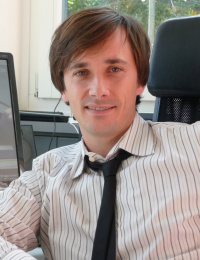
Prof. Gregoire Courtine
Professor, International Paraplegic Foundation Chair in Spinal Cord Repair,
Center for Neuroprosthetics and Brain Mind Institute,
SWISS FEDERAL INSTITUTE OF TECHNOLOGY (EPFL)
Title: Neuroprosthetic technologies to improve locomotion after spinal cord injury
Abstract: Over the past decade, we have designed a range of robot-assisted rehabilitation procedures and neuromodulation therapies of the brainstem and spinal cord. We showed that the combination of these neuroprosthetic technologies restored supraspinal control of locomotion in rats with a spinal cord injury leading to permanent paralysis. This recovery relied on the extensive remodeling of spared neuronal pathways in the brain and spinal cord. The successful implementation of these interventions required the development of myriad tools, including neural interfaces, computational models, real-time control platforms, robotic systems, and advanced anatomical analyses. Here, I will describe the mechanistic framework through which we designed these technologies. I also will reveal some of the mechanisms underlying the immediate and long-term effects of neuroprosthetic rehabilitation on motor control capacities. Finally, I will highlight our current efforts to translate our findings in rodent models into a viable therapy to improve the recovery of locomotion in human patients with spinal cord injury.
Short CV:
Prof. Dr. Grégoire Courtine was originally trained in Mathematics and Physics, but received his PhD degree in Experimental Medicine from the University of Pavia, Italy, in 2003. From 2004-2007, he held a Post-doctoral Fellow position at the Brain Research Institute, University of California at Los Angeles (UCLA) under the supervision of Dr. Reggie Edgerton. In 2008, he became assistant professor at the university of Zurich in Switzerland where he established his own research laboratory. He recently has been nominated Associate Professor at the Swiss Federal Institute of Technology in Lausanne (EPFL), within the newly-launched Center for Neuroprosthetics and the Brain Mind Institute. The main focus of his lab includes the development and use of neuroprosthetic systems, robotic interfaces, pharmacological cocktails, neuroregenerative therapies, and neurorehabilitation interventions to restore motor functions after neurological impairments such as spinal cord injury or stroke. His laboratory addresses a wide range of research paradigms in mice, rats, cats, monkeys, and humans. In the past four years, he published several articles in Nature Neuroscience and Nature Medicine, which were discussed in national and international press extensively. He received numerous honors and awards such as the 2007 Chancellor’s award for excellence in post-doctoral research from UCLA and the 2009 Schellenberg Prize for Research that was awarded by the International Foundation of Research in Paraplegia.