
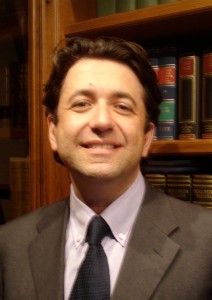
Dr. Silvestro Micera
Translational Neural Engineering Area, Head,
The BioRobotics Institute, Scuola Superiore Sant’Anna
Bertarelli Foundation Chair in Translational Neuroengineering,
Center for Neuroprosthetics and Institute of Bioengineering,
School of Engineering, Ecole Polytechnique Federale de Lausanne (EPFL)
Title: The quest for a bionic hand
Abstract: Replacing a missing upper limb with a functional one is an ancient need and desire. Historically, humans have replaced a missing limb with a prosthesis for many reasons, be it cosmetic, vocational, or for personal autonomy. The hand is a powerful tool and its loss causes severe physical and often mental debilitation. The need for a versatile prosthetic limb with intuitive motor control and realistic sensory feedback is huge and its development is absolutely necessary for the near future. Robotic research has been transferred into industry and more functional prostheses have recently been introduced on the market. Nevertheless, surveys on using such artificial hands reveal that 30-50% of amputees do not use their prosthetic hand regularly, basically due to its low functionality, poor cosmetic appearance, and low controllability. The fundamental issue is therefore to improve the voluntarily-controlled dexterity and to restore the ability to get sensory information while grasping, allowing the amputee to perform tasks that are necessary for everyday activities. It is necessary to (re)-establish a fast, intuitive, bidirectional flow of information between the user’s nervous system and the smart artificial device. Among the possible solutions to achieve this goal, interfaces with the peripheral nervous system are an interesting and promising solution. In particular, intraneural electrodes represent an adequate choice because of their selectivity and acceptable invasiveness. In this presentation, we show the results achieved during our recent implants of intraneural electrodes in the median and ulnar nerves of one amputee during a four-week trial. We showed that using this approach it is possible to restore the bidirectional connection between a dexterous hand prosthesis and the nervous system. The user was also able to improve his ability to provide useful motor commands over time. This finding can open up interesting opportunities for sensory restoration in prosthetic hands.
Short CV:
Dr. Micera is an author of more than 40 ISI scientific papers and several international and Italian patents on neural interfaces and robotic systems for rehabilitation. He is a Senior Member of the IEEE Engineering in Medicine and Biology, and Robotics and Automation Societies and a member of the International Society for Gerontechnologies (ISG). He is member of the Editorial Board of the Journal of Neuroengineering and Rehabilitation. Since 2008 Dr. Micera is also Co-Chair of the Technical Committee on Rehabilitation & Assistive Robotics of the IEEE Robotics and Automation Society. He is currently an Associate Editor of IEEE Transactions on Biomedical Engineering and of IEEE Transactions on Neural Systems and Rehabilitation Engineering.