
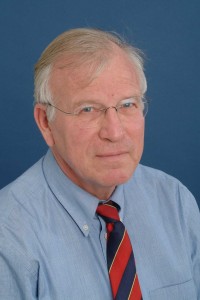
Prof. Volker Dietz
Spinal Cord Injury Center
Balgrist University Hospital
Zurich, Switzerland
Title: The physiological basis of neurorehabilitation
Abstract: In patients suffering from a movement disorder after a damage of the central nervous system, improvement in walking or hand function can be achieved by providing functional training. After a stroke or a spinal cord injury (SCI), neuronal centers below the level of lesion exhibit plasticity that can be exploited by functional training paradigms that include assisting stepping or hand/arm movements of the affected side. Training of locomotor function, requires body-weight support (BWS), while the subjects stand on a moving treadmill. In these individuals, human spinal locomotor centers become activated if an appropriate afferent input is provided. Load- and hip-joint-related afferent input seems to be of crucial importance for the generation of a locomotor pattern and, consequently, the effectiveness of the locomotor training. In severely affected stroke/SCI subjects, rehabilitation robots enable longer, more intensive training. In addition, they also offer the ability to standardize training approaches and to obtain objective feedback within training sessions allowing to monitor functional improvements over time. In my talk, first, background information will be given for the neural mechanisms of gait recovery after stroke/SCI. Second, the afferent input required for an effective training will be discussed and, third, findings from clinical studies will be presented covering the feasibility and efficacy of robot-assisted locomotor training.
Short CV:
Professor Dr. Volker Dietz completed medical training and specialisation in neurology and neurophysiology at the University of Freiburg, Germany. His research was devoted to human motor control and movement disorders. Using the technique of neurophysiological recordings during movements he established a novel pathophysiological basis of, for example, spastic movement disorder. The discrepancy between the clinical condition of spasticity and the movement disorder had profound therapeutical consequences. In 1992 Prof Dietz became director of the Spinal Injury Center and chairman of Paraplegiology at the University of Zurich, i.e. the first chair in Paraplegiology in Europe. With the cooperation with Martin Schwab from the Brain Res Institute together with the Novartis company he translated basic research of the effect of Nogo A antibodies on spinal tract regeneration in SCI animals to the human setting. For the clinical application of regeneration inducing therapies and the establishment of standardized assessments Dietz founded (together with Armin Curt and Martin Schwab) the European network of paraplegic centers (EMSCI network). Another focus of research (together with the Engineer Gery Colombo) was the development of robotic devices neurorehabilitational, such as the ‘Lokomat’. He edited, (together with T. Nef and Zev Rymer) the Handbook on “Neurorehabilitation Technology” coming out in January 2012. Another focus of research during last years was the course of neuronal function after deprivation of supraspinal input as a basis for a successful regeneration inducing therapy). In 2002/2003 he was guest-professor in the Miami Center to Cure Paralysis in Miami. Dietz has published 288 peer reviewed original papers and received several awards for his research on spinal cord injury (e.g. ‘Heiner Sell lecture’ awarded by the ASIA).